
Description
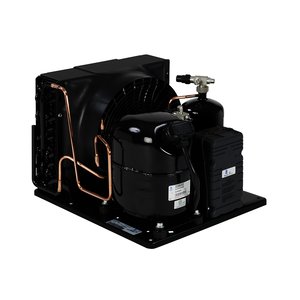
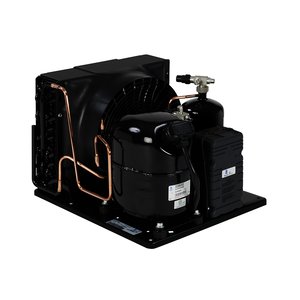
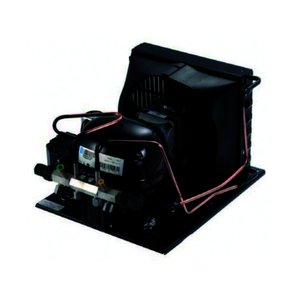
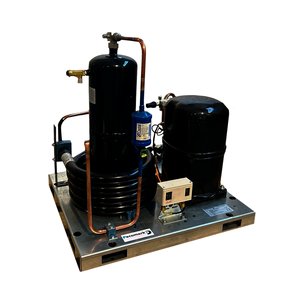
Water-cooled condensing units for refrigeration installations without heat rejection to the outside
The condensing water can come from the mains, from a recirculation circuit with a cooling tower or from a heat recovery system.
Technical specifications
- Water-cooled condenser: plate or tube heat exchanger depending on model and capacity
- No fans: silent operation with no heat rejection to the air
- Compatible with R-404A, R-448A, R-449A and A2L refrigerants depending on model
- Built-in electrical panel with protection and control module
- Thermostatic water valve included to regulate condensing water flow
- Low temperature (LT) and medium temperature (MT) versions
- Can be integrated with a heat recovery circuit
Advantages
✔ Completely silent operation: no condenser fans
✔ Indoor installation without hot air exhaust ducts
✔ Compatible with heat recovery: rejected heat can be used for domestic hot water or heating
✔ High efficiency in high ambient temperatures (water temperature is more stable)
✔ Condenser performance not limited by outdoor ambient temperature
✔ Compact solution for premises where outdoor equipment cannot be installed
FAQs
How much water does a water-cooled condensing unit use?
Water consumption depends on the unit’s capacity and the inlet water temperature. As a guide, a unit with 5 kW of condensing capacity may use between 1 and 2 litres per minute with water at 15-20 °C. In recirculation systems with a cooling tower, actual consumption is drastically reduced (only evaporated water is replaced). In once-through mains water installations, consumption can be significant: we recommend comparing the cost of water with the alternatives.
Do I need a cooling tower to use a water-cooled condensing unit?
Not necessarily. Water-cooled condensing units can be connected to mains water (with a regulating valve), to a well or irrigation channel circuit (where available and permitted), or to a closed circuit with a cooling tower or water chiller. The best solution depends on the availability and cost of water at your installation. For medium and large capacities, a closed circuit with a tower is usually the most efficient and economical long-term solution.