
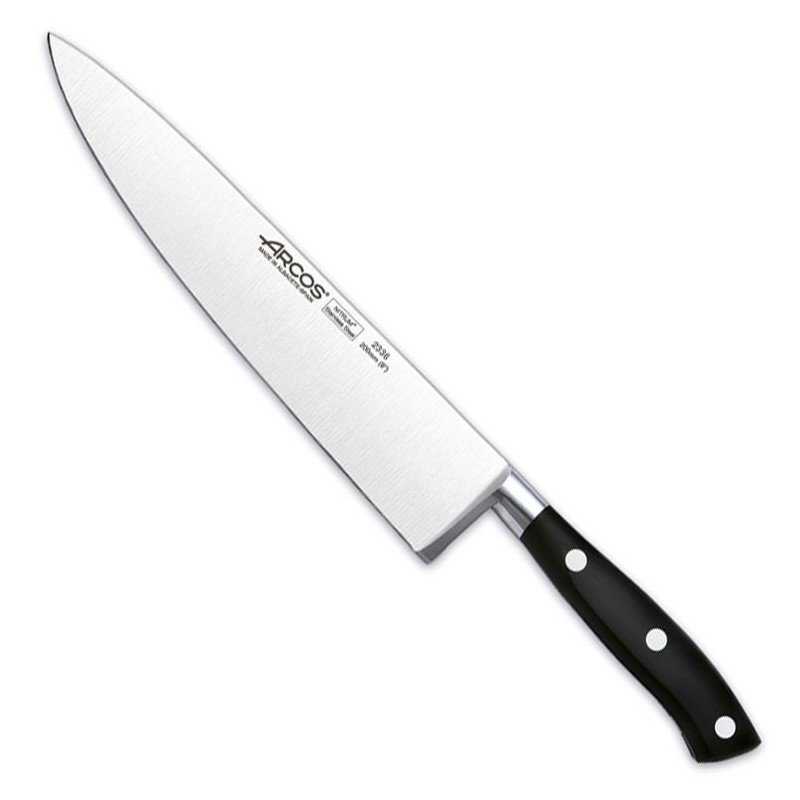
Arcos Riviera series chef’s knife with a 200 mm forged NITRUM stainless steel blade and riveted POM scales. The reference kitchen size, covering most of the daily work.
ARCOS CHEF’S KNIFE 200 MM, RIVIERA SERIES
Price on request

Questions? Call us on +34 967 219 649 or message us on WhatsApp
We reply to quote requests within 24 hours.
Description
The Arcos chef’s knife 200 from the Riviera series carries a forged NITRUM® stainless steel blade, polyoxymethylene (POM) handle scales and tongue-and-groove stainless steel rivets. 200 mm is the reference size for a kitchen knife: the one that covers most of the daily work.
What it is used for
If a kitchen could have only one knife, it would be this one. At 200 mm you chop, joint, fillet and julienne without changing tool, and the blade is deep enough that your knuckles do not touch the board. It is the knife a cook picks up without thinking, and the one that accumulates the most hours by the end of the week.
- Professional kitchens: the full mise en place, from vegetables to boneless meat.
- Hotels and institutional catering: section work in volume.
- Preparation rooms and delicatessens: cutting up product for preparation.
- Catering: preparation in a central kitchen and assembly on site.
- Demanding domestic use: the reference knife in the house.
Technical specifications
| Series | Riviera |
| Type | Chef’s knife |
| Blade length | 200 mm |
| Steel | Forged NITRUM® stainless steel, high performance and durability |
| Handle scales | Polyoxymethylene (POM), smoothed finish |
| Scale temperature range | -40 C to 150 C |
| Rivets | Tongue-and-groove, stainless steel |
Steel or sharpener: when to use which
These are two different things and they are often confused. A steel removes no material: it straightens the edge that has folded over with use and brings the bite back in a few seconds. You use it several times a day, before each run of work. A sharpener or a stone does remove material and creates a new edge; you turn to those when the steel can no longer recover the cut, not before.
Sharpening more than necessary shortens the life of the knife; sharpening less than necessary forces the operator and multiplies the risk of a cut. Both errors are common, and the rule that avoids them is simple: the steel is routine, the sharpener is the exception.
What the supply includes
- One Arcos Riviera series chef’s knife with a 200 mm blade.
- Forged NITRUM® stainless steel blade with riveted POM scales.
- Advice from Bernad® on the range of knives, steels and sharpeners.
Bernad® after-sales service
At José Bernad, S.L. we have our own workshops and after-sales service to respond quickly to any issue with your equipment. If you have any questions before or after your purchase, call us on +34 967 219 649 or message us on WhatsApp.
Frequently asked questions
What is the right chef’s knife size?
For most kitchens, 200 mm. It is the length that lets you work large pieces without being unwieldy on small cuts. Below it you gain precision and above it volume capacity, but 200 mm is the balance point and that is why it is the best-selling size.
Can I chop with it on any board?
On polyethylene or wood, yes. On glass, stone or stainless steel, no: those surfaces round the edge off in very few cuts. The board is the decision that most affects how often you will have to sharpen.
Is it suitable for cutting meat?
For boneless meat, yes, and very well. For pieces with bone you need a butcher knife, a cleaver or the saw. Striking bone with a chef’s knife is the fastest way to put a nick in the middle of the blade.
What daily maintenance does it need?
A steel before working, washing and drying when finished, and storage in a knife holder, sheath or magnetic bar. Leaving it loose in a drawer or submerged in the sink with other utensils is what ruins an edge fastest, and what causes the most accidents when reaching for it.
How does it differ from a santoku?
The chef’s knife has a higher tip and is used with a rocking motion; the santoku is wider and cuts straight down. The chef’s knife chops faster; the santoku leaves cleaner slices. They are complementary rather than alternatives.
Other knives in the range
- Arcos chef’s knife 150: the short version, for precision cuts.
- Arcos chef’s knife 250: the long version, for large volumes.
- Arcos chef’s knife 250 Colour: the same job with a Colour series handle.
- Arcos bread knife 200: the same length with a serrated edge for bread.
Specifications
| Weight | 1 kg |
|---|
No reviews for this product yet. Only customers who have purchased it can leave a review.
Related products
-
 Arcos
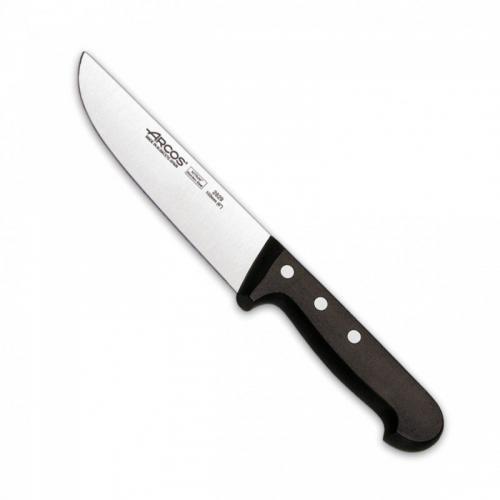
ARCOS BUTCHER KNIFE 150
-
 Arcos
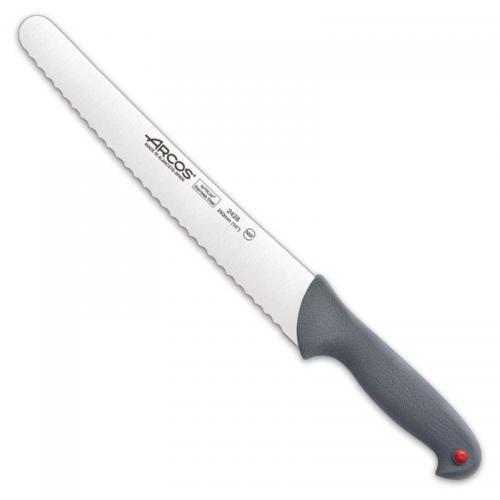
ARCOS PASTRY KNIFE 250
-
 Arcos
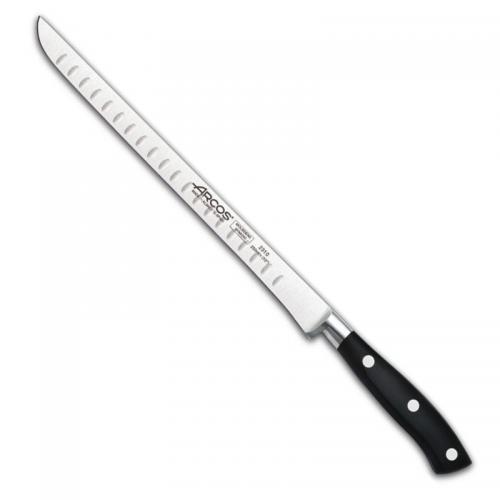
ARCOS HAM KNIFE 250