

Description
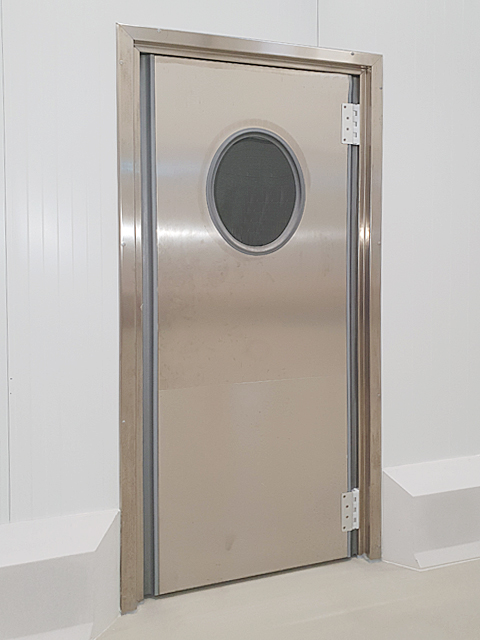
Standard hinged cold room door for chiller and freezer rooms
The standard hinged cold room door is the benchmark model for the main access to chiller and freezer rooms in mid-level industrial and commercial installations. It combines a high-density polyurethane sandwich panel with a high-tightness hinge and closing system, delivering optimum thermal performance for temperatures between -25 °C and +5 °C.
Technical specifications
- Type: standard hinged (swing) door
- Polyurethane sandwich panel (80-100 mm for freezer rooms)
- Industrial hinges with adjustable self-closing mechanism
- Triple-lip perimeter gasket for optimum sealing
- Built-in gasket heating to prevent ice around the perimeter (freezer version)
- Cam-action handle with inside emergency release
- Extruded aluminium frames with thermal break
- Galvanised, lacquered or stainless steel finish (depending on version)
Advantages
✔ High-efficiency thermal insulation for negative and positive temperatures
✔ Guaranteed sealing with triple-lip gasket
✔ Built-in gasket heating on freezer versions to prevent ice lock-ups
✔ High-pressure cam closing system for uniform perimeter sealing
✔ Long service life with basic maintenance (annual hinge lubrication)
Applications
Industrial freezer rooms; chiller rooms for meat, fish and dairy products; industrial pastry and bakery workshops; medium-capacity cold logistics warehouses; temperature-controlled pharmaceutical installations.
FAQs
Why does the cold room door gasket sometimes freeze and the door not close properly?
Ice on the perimeter gasket is the most common cause of closing problems on freezer room doors. It happens when the gasket heating is not working properly (broken heating cable or no power), when the gasket is worn and lets humid outside air through, or when the cold room temperature is very low and the defrost cycle is not sufficient. Check the gasket heating circuit if this happens.
How often should a cold room door gasket be replaced?
Perimeter gaskets last 5-10 years under normal conditions. They should be inspected annually and replaced when they show cracks, permanent deformation or loss of elasticity that compromises sealing. A gasket in poor condition can increase the cold room’s energy consumption by 15-25%.