

Description
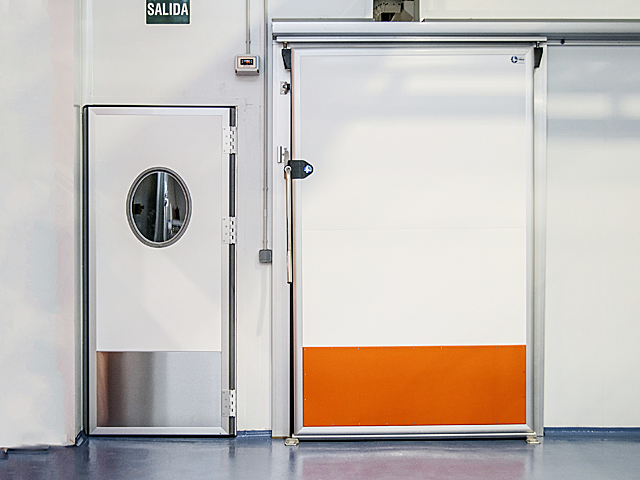
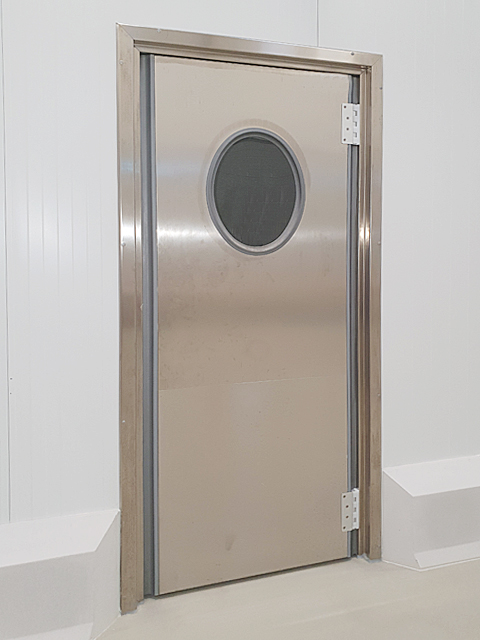
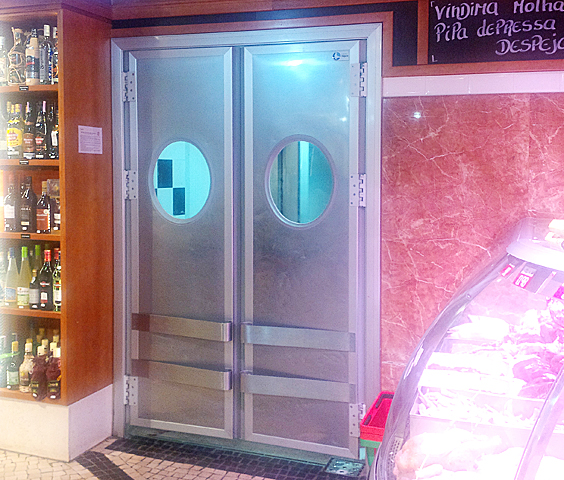
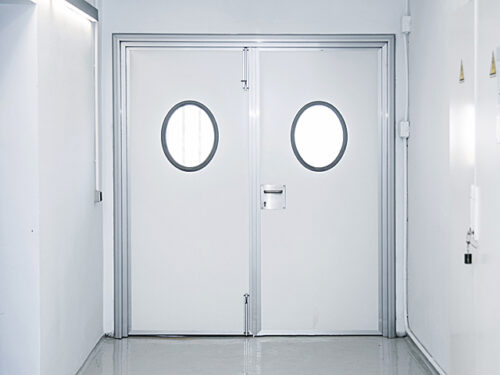
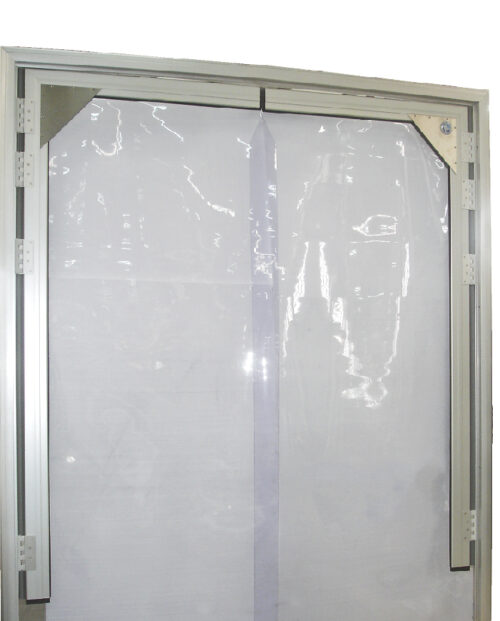
Standard swing door for food industries and production areas
Swing doors are the most practical passage solution for areas with heavy staff traffic in food industries, workshops and production areas. Unlike conventional hinged doors, swing doors open in both directions, allowing people to pass without stopping to push the door, which makes work much easier for staff with their hands full. Their lock-free design makes passage completely smooth and unobstructed.
Technical specifications
- Type: standard swing door (opens in both directions)
- Material: high-density rigid PVC, impact resistant
- Standard colour white or grey (other colours available on request)
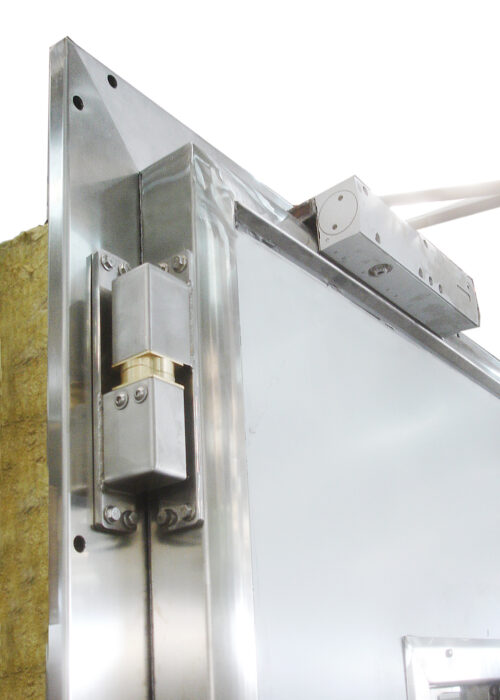
- Centralised return hinge system with damping
- Resistant to industrial detergents and disinfectants
- Operating temperature: 0 °C to +40 °C
- No vision panel (standard version)
Advantages
✔ Passage in both directions without opening/closing by hand
✔ Easy-to-clean, corrosion-resistant PVC
✔ Soft damping for closing without impacts that could damage the door or injure staff
✔ Simple installation in standard frames or directly between pillars
✔ No exposed metal parts that can rust
Applications
Passages between production areas in the food industry; access to changing rooms and cleaning areas; separation between areas at different temperatures in hospitality; bakery, pastry and industrial kitchen workshops; processing plants with heavy staff flows.
Standards and compliance
Doors in food installations must be made of washable, impermeable materials according to Regulation (EC) 852/2004. PVC meets these requirements. In emergency areas, swing doors are compatible with the evacuation requirements of the Spanish CTE DB SI fire safety code, as they open in both directions.
FAQs
Can a swing door be used as a cold room door?
No. A swing door has no thermal insulation and is not suitable for cold rooms. Its purpose is to separate work areas, not to create a thermal barrier. Cold rooms need doors with polyurethane sandwich panels and perimeter sealing. Swing doors can be installed at the approach to the cold room (anteroom or lobby) to reduce the entry of warm air.
What is the difference between PVC and polypropylene swing doors?
PVC is more economical and offers good resistance to impact and standard cleaning products. Polypropylene (PP) is more resistant to aggressive detergents and extreme temperatures, making it more suitable for areas with frequent use of concentrated acids or alkalis. Polyethylene (PE) offers the highest impact resistance for very heavy traffic.
Reviews
There are no reviews yet.