

Description
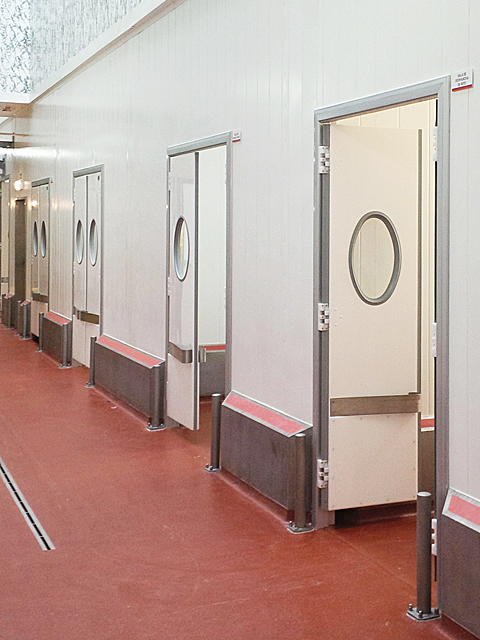
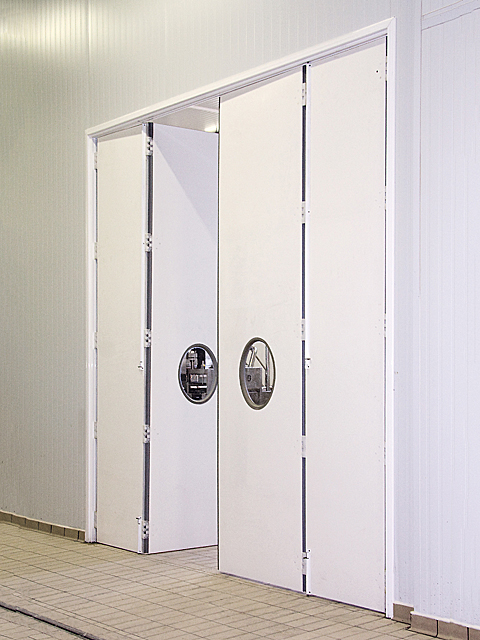
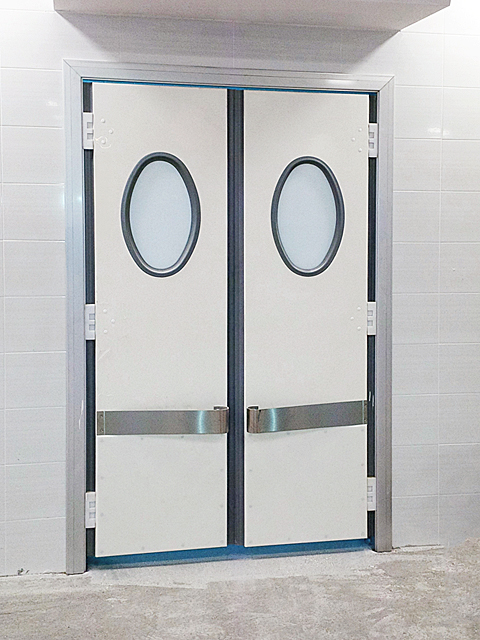
Polypropylene swing door for industries with intensive chemical cleaning
Swing doors are the most practical passage solution for areas with heavy staff traffic in food industries, workshops and production areas. Unlike conventional hinged doors, swing doors open in both directions, allowing people to pass without stopping to push the door, which makes work much easier for staff with their hands full. Their lock-free design makes passage completely smooth and unobstructed.
Technical specifications
- Type: polypropylene (PP) swing door
- Material: copolymer polypropylene, greater chemical resistance than PVC
- Operating temperature: -10 °C to +60 °C
- High resistance to industrial cleaning acids and alkalis
- Centralised return hinge system with damping
- No vision panel (standard version)
- Smooth, washable, non-porous finish
Advantages
✔ Greater chemical resistance than PVC in environments with aggressive cleaning
✔ Suitable for environments using hypochlorite, citric acid or alkaline foam
✔ Greater durability in areas with high cleaning temperatures
✔ Dimensional stability even in CIP and COP cleaning cycles
✔ Easy to clean with pressurised water without surface damage
Applications
Dairy industry; canning plants; pharmaceutical and cleaning products industry; processing areas with frequent acid cleaning; workshops with demanding HACCP protocols.
Standards and compliance
Polypropylene is an inert material approved for use in installations with indirect food contact under Regulation (EC) 1935/2004. It complies with Regulation (EC) 852/2004 as regards washable, impermeable materials.
FAQs
Does polypropylene withstand pressure washing and steam cleaning?
Yes, polypropylene has excellent resistance to pressurised water and continuous temperatures of up to 60 °C (with higher peaks for brief exposure). It is very suitable for installations cleaned with hot pressurised water. For high-temperature steam cleaning (above 80 °C), check the manufacturer’s specification, as some PP grades may deform.

Reviews
There are no reviews yet.