
4 load cell platform

Description
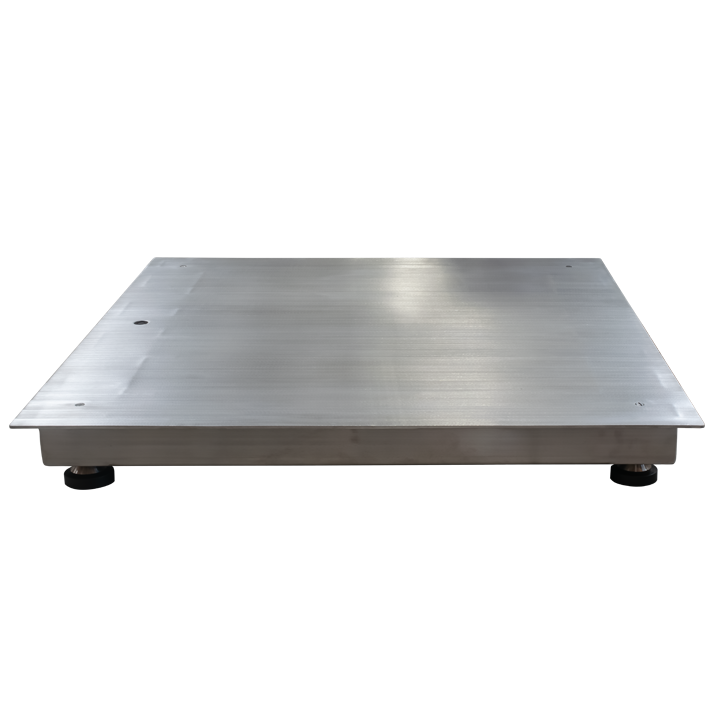
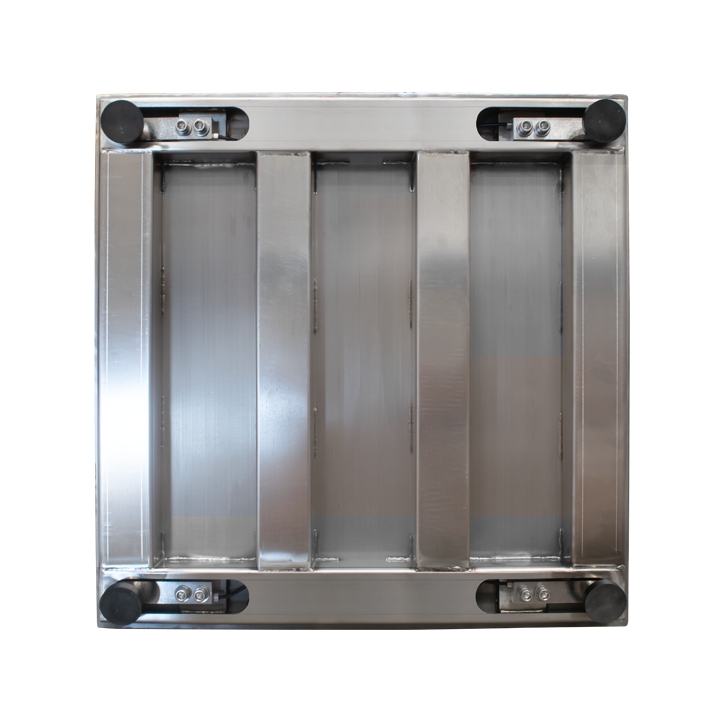
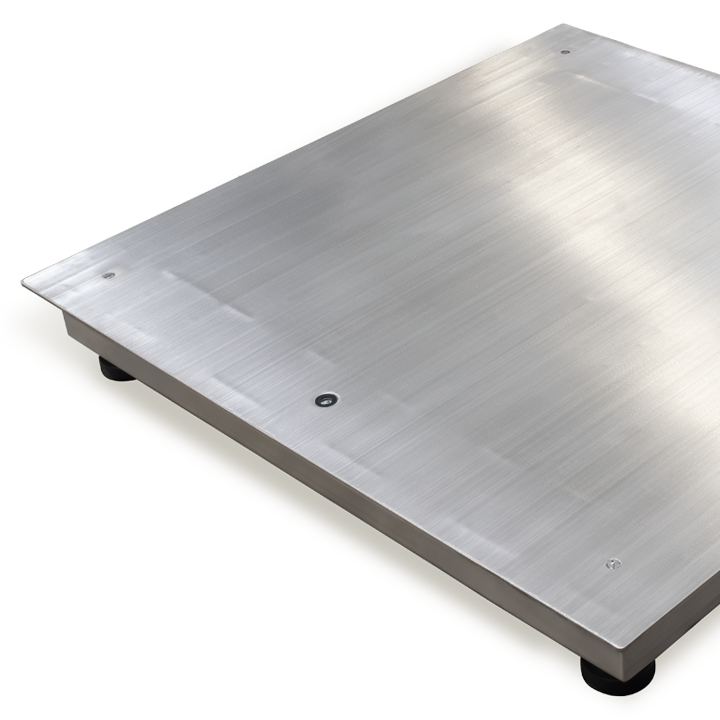
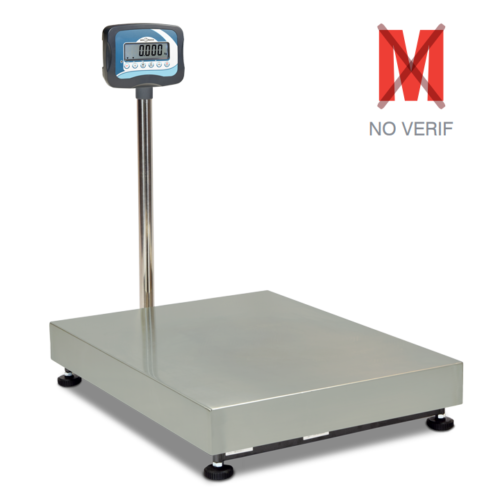
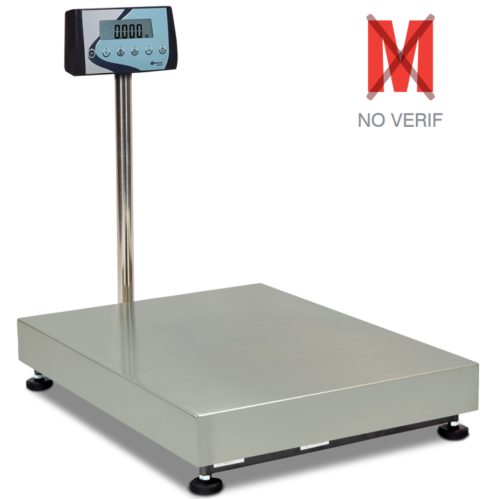
The BXS weighing platform is a four load cell floor scale in stainless steel with IP68 protection, 4.5 mm smooth plate and junction box also in stainless steel. It is valid for legal metrology, supports above-floor or pit installation and is supplied with five metres of cable, CUF7 connector and built-in spirit level.
What it is for
It is the platform for wet environments with intensive cleaning, where a painted structure does not last. Everything in contact with water —plate, structure, load cells and junction box— is stainless, and the smooth plate makes sweeping and scrubbing easier without residue left in raised patterns.
- Cutting room: weighing trolleys, tubs and product containers with daily floor washing.
- Food industry: checking incoming and outgoing goods in wet process areas.
- Dispatch: weighing pallets and packages with the platform pit-mounted flush with the floor, without ramps.
- Cold storage: checking goods in areas where condensation builds up.
- Receiving: checking the weight of the load against the supplier’s delivery note.
Technical specifications
| Type | Stainless steel 4 load cell weighing platform |
| Legal metrology | Valid |
| Installation | Above floor or pit-mounted |
| Top plate | Smooth, 4.5 mm thick |
| Structure | Folded sheet |
| Load cells | OIML R-60 C3, stainless steel, IP68 protection |
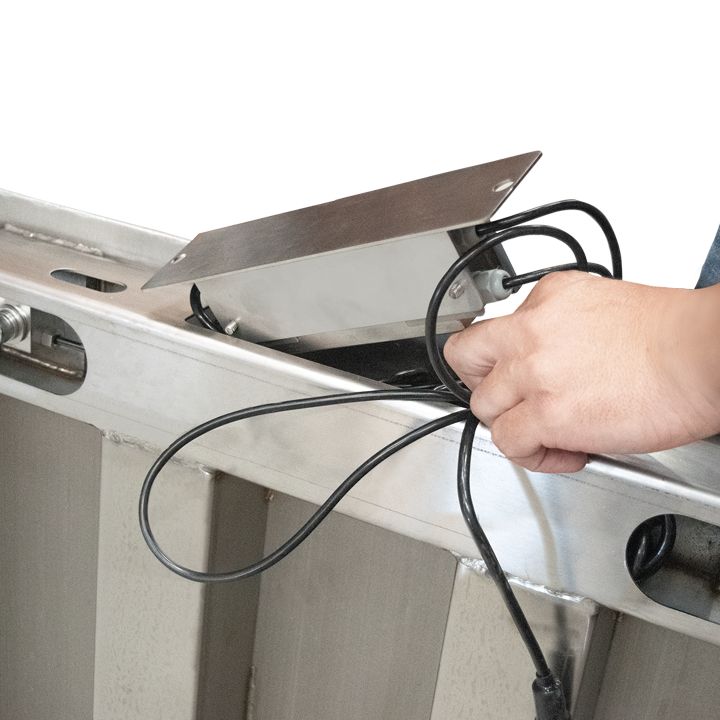
| Junction box | Stainless steel, IP66 protection |
| Levelling | Height-adjustable feet up to 10 mm and built-in spirit level |
| Cabling | 5-metre output cable included |
| Connector | CUF7 |
Legal metrology and periodic verification
The BXS is valid for legal metrology and has load cells with an OIML R-60 class C3 test certificate, the usual accuracy level for floor scales intended for regulated uses. That class indicates how many verification intervals the load cell supports, which is the starting point for the assembly to be approved.
Remember that verification applies to the installed assembly: platform, load cells and indicator. In Spain, Metrology Law 32/2014 and Royal Decree 244/2016 require the instrument to be verified before being put into service and the periodic verification every two years to be renewed by an authorised Control Body, as well as re-verification after a repair or broken seal.
What is supplied
- Stainless steel four load cell platform with 4.5 mm smooth plate and folded-sheet structure.
- Stainless steel OIML R-60 C3 load cells with IP68 protection.
- Stainless steel junction box with IP66 protection.
- Five metres of output cable and CUF7 connector.
- Adjustable feet up to 10 mm and built-in spirit level.
The weight indicator is chosen separately according to the application: simple reading, ticket printing or PC connection.
Bernad® installation and technical service
José Bernad, S.L. has been installing weighing equipment in the food industry from Albacete for almost 40 years. We are a team of 35 people and have our own technical service: the pit civil works, installation, indicator connection and calibration are carried out by our team, not by a third party.
We offer pairing of the platform with the indicator, programming of the assembly —range mode, output formats, weight limits— and commissioning with calibration at the final location as a service, as well as handling verification with a Control Body when the use requires it.
Frequently asked questions
What does it mean that the load cells are OIML R-60 C3?
R-60 is the international recommendation governing load cell testing, and C3 is the accuracy class: it indicates that the load cell supports up to 3,000 verification intervals. It is the level usually required of a floor scale intended for regulated use.
What is the difference between above-floor and pit installation?
Above floor, the platform rests on the floor and is accessed with ramps or with a pallet truck lifting the load. Pit-mounted, it sits in a pit flush with the floor, so the pallet rolls on without a step. The second requires civil works, but greatly speeds up daily work.
Why is the load cells’ IP68 protection important?
Because load cells are the weak point of a floor scale in wet areas: if water gets in, the reading drifts and eventually fails. IP68 means dust-tightness and resistance to continuous immersion, providing a margin against the water that collects when the floor around the platform is scrubbed.
What is the CUF7 connector for?
It allows the platform to be connected to and disconnected from the indicator without handling loose cables or opening the junction box. It makes changing the indicator, moving the equipment and technical service tasks easier, while maintaining a sealed, repeatable connection.
Does the platform need to be levelled?
Yes, it is essential. The BXS includes a spirit level and feet adjustable up to 10 mm precisely for that purpose. A tilted platform distributes the load unevenly between the four load cells and causes reading differences depending on where the package is placed on the plate.
What indicator can I connect to it?
Any indicator compatible with analogue load cells. For remote reading the GI400 with 40 mm digits is common; if a printed ticket is needed at the workstation, the GI410i PRINT has an integrated thermal printer. We carry out the pairing and calibration of the assembly.
Alternatives and related models
- PTB platform: also stainless and pit-mountable, with IP69k load cells and top access to the load cells without lifting the platform, designed for high-pressure cleaning.
- BVLS platform: low-profile stainless version, with folding ramps included, when a pit cannot be built.
- MTX platform: enamelled steel equivalent with checker plate, more economical for dry areas.
- BMM platform: single load cell for smaller loads, available in three versions depending on the sealing rating.
- GI400 LCD ABS indicator: display with 40 mm digits and two RS232 outputs to complete the weighing assembly.
You must be logged in to post a review.

Reviews
There are no reviews yet.