

Description
Electronic controllers for refrigeration installations
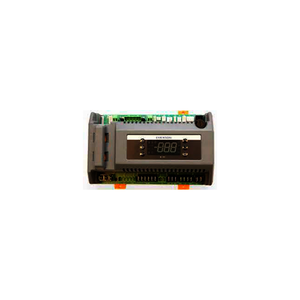
Electronic Controllers for Refrigeration Installations are regulation and control devices designed to manage the temperature, defrost and alarm functions of cold rooms and commercial refrigeration equipment. The controller is the “brain” of the refrigeration installation: it receives temperature readings from the probes, switches the compressor and fans on and off according to the working programme, manages defrost cycles and raises alarms when the temperature goes out of the permitted range.
Technical specifications
- Precise temperature control with 0.1 °C resolution
- Inputs for NTC or PT100 probes depending on model
- Outputs for compressor, fans, defrost heater and alarm
- LED or LCD display with real-time temperature reading
- Programmable automatic defrost cycles
- High and low temperature alarm function with relay output
- Panel or DIN rail mounting depending on model
Advantages
✔ Precise temperature control to protect stored products
✔ Automatic defrost management: no manual intervention
✔ Temperature alarms: immediate warning of refrigeration system failures
✔ Simple installation: compatible with most refrigeration installation configurations
✔ Intuitive programming via the front panel or software depending on model
✔ Alarm log for HACCP traceability
Applications
Control of chiller and freezer rooms; management of display cabinets; control of condensing units and refrigeration racks; installations requiring temperature recording for HACCP compliance; replacement of faulty controllers or technology upgrades of existing installations.
Standards and compliance
The electronic controllers comply with the EMC Directive 2014/30/EU and the Low Voltage Directive 2014/35/EU. In installations with HACCP requirements, the temperature recorder must comply with EN 12830 on temperature recorders for the transport, storage and distribution of chilled, frozen, deep-frozen/quick-frozen food and ice cream.
FAQs
What is the difference between a temperature controller and a recorder?
A temperature controller regulates the operation of the refrigeration equipment (switching the compressor on and off) to maintain the set temperature. A temperature recorder stores the history of measured temperatures for later consultation, for traceability and HACCP compliance. Many installations use both: the controller for regulation and the recorder for traceability. Some models combine both functions in a single device.
Can I replace a faulty controller with one from another brand?
Generally yes, provided the new controller is compatible with the existing probes and wiring (probe input type, supply voltage, output type). The most common controllers on the Spanish market (Carel, Eliwell, Dixell) are largely interchangeable in standard installations. Check with the installer to verify compatibility before replacing it.

Reviews
There are no reviews yet.