Description
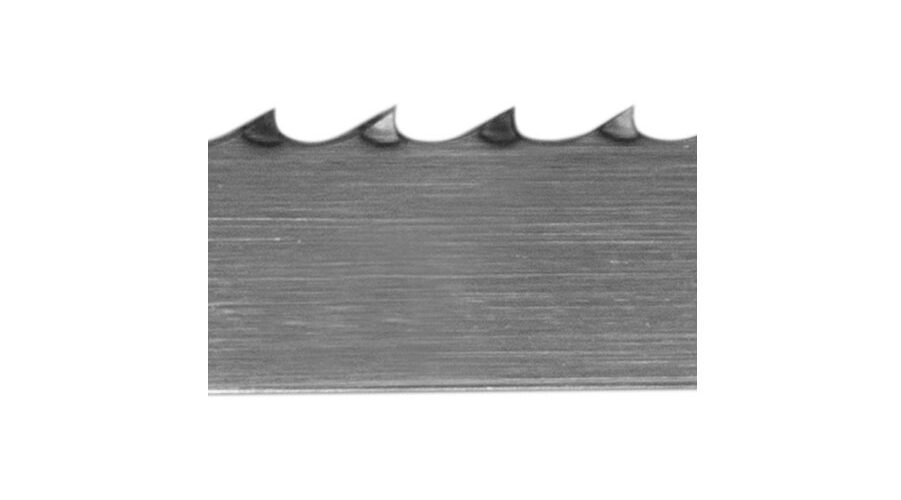
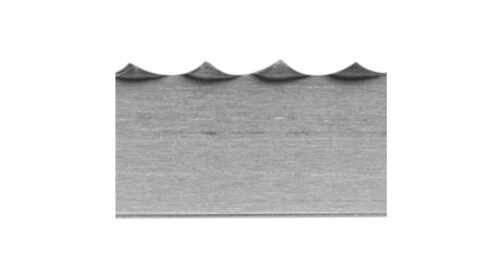
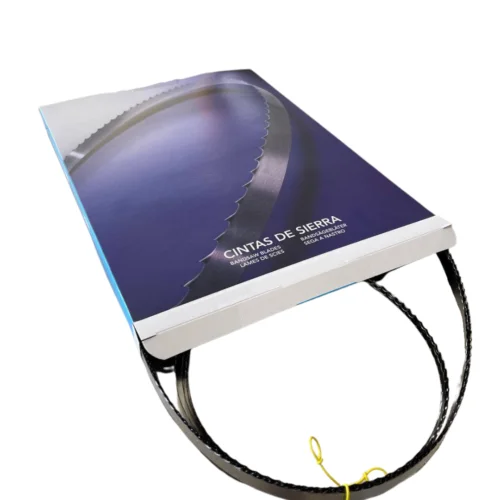
The 1650 mm bone band saw blade is made from laminated carbon steel with a special pearled tooth rated for double life. It suits saws taking a 1650 mm band and is built to pass through bone while keeping the cut clean and free of residue. Supplied in a box of four blades.
Band type: BONE (4 TPI). Tooth size: 6.35 mm (4 teeth per inch). A very balanced option for bone-in meat and for improving the look of the cut. Especially suited to machines with a linear speed below 20 m/s. Dimensions: 1,650 × 16 × 0.50 mm (length × width × thickness).
What a 1650 mm bone blade is used for
In a butcher’s shop the saw is used above all for what a knife cannot do: get through bone. Chops, rib racks, shanks and pieces cut up for stewing all come off it. And because bone is the hardest material the band will ever meet, it is also what determines when the band has to be changed.
- Butcher’s shop: pork, beef and lamb loin and rib racks.
- Supermarket: cutting chops on the fresh counter.
- Catering: cutting up joints for roasting and stewing.
- Preparation room: breaking down pieces that have not been boned.
- Cutting room: separating bone-in sections.
Technical specifications
| Band length |
1,650 mm |
| Dimensions |
1,650 × 16 × 0.50 mm (length × width × thickness) |
| Tooth type |
4 TPI (4 teeth per inch) |
| Tooth size |
6.35 mm (4 teeth per inch) |
| Teeth per inch (TPI) |
4 |
| Recommended use |
Bone-in meat: a very balanced option that improves the look of the cut. |
| Machine speed |
Especially suited to machines with a linear speed below 20 m/s |
| Application |
Cutting bone |
| Material |
Laminated carbon steel |
| Tooth profile |
Special pearled tooth, double life |
| Cut finish |
Clean, no residue |
| Performance |
High |
| Supply |
Box of 4 blades |
What the operator has to be trained on
On a band saw, training comes down to four concrete things: never remove the guards, always use the pusher, never bring a hand near the cutting zone, and stop the machine before clearing away offcuts. Written like that it sounds obvious, but the accidents on this equipment come from exactly those four gestures being skipped when the shop is busy.
The machine itself has, with CE marking, guards and an emergency stop. No guard, though, compensates for an unsafe habit repeated daily, which is why the training side is the part that actually prevents accidents rather than merely containing them.
What the supply includes
Box of four 1650 mm band saw blades for cutting bone.
The same length is available in a version for fresh meat.
Frequently asked questions
Which band do I need: meat, bone or frozen?
It depends on what you cut and on your saw’s linear speed (it is in the manual; if you do not know it, call us on +34 967 219 649 with the make and model). The three versions, in this length:
- MEAT (half-moon): 7 mm (half-moon) tooth. Recommended for fresh meat. Dimensions: 1,650 × 16 × 0.40 mm (length × width × thickness). See the 1,650 mm meat band.
- BONE (4 TPI): 6.35 mm (4 teeth per inch) tooth. A very balanced option for bone-in meat and for improving the look of the cut. Especially suited to machines with a linear speed below 20 m/s. Dimensions: 1,650 × 16 × 0.50 mm (length × width × thickness). (this blade)
- FROZEN (3 TPI): 8.46 mm (3 teeth per inch) tooth. Recommended for frozen product: a more aggressive cut and high production volume. Works especially well on machines with a linear speed above 20 m/s. Dimensions: 1,650 × 16 × 0.50 mm (length × width × thickness). Not in our range at 1,650 mm: see other lengths in Saw Blades.
How often should the band be changed if I cut bone daily?
Far more often than with meat. There is no universal figure because it depends on the kilos and the type of bone, but the sign never changes: when you have to push the piece, or the bone starts splintering, the band is finished.
What happens if the band breaks mid-cut?
The guards exist precisely to contain that. This is why they must never be removed or defeated: a band breaking at working speed is the most serious risk on the machine, and the guard is the only thing standing in the way.
Do lamb and beef wear the band at the same rate?
No. Beef bone is noticeably harder and denser than lamb or pork, so the band is spent sooner in a shop working a lot of beef. It is worth setting your replacement planning against what you actually cut rather than an average.
Can I cut frozen bone with this blade?
No, that is not what it is for. The bone version (4 TPI) is designed for bone-in meat; for cutting frozen product there is our frozen range (3 TPI).
Should the band be greased?
Not while it is in use, since it is an item in contact with food. What does matter is drying it thoroughly after cleaning: carbon steel rusts easily if it is left damp, and rust on the tooth ruins the cut.
How do I know what blade length my saw needs?
The number in the product name (1600, 1820, 2330…) is the blade length in millimetres, and it must match exactly the length specified by your saw’s manufacturer on the rating plate or in the manual. If you have no documentation, measure the old blade laid out along its full circumference. Bernad® can help you confirm the length your machine takes.
How many blades come in a box, and how should I store spares?
Four blades, folded to take up less space and travel protected. Store them in their box, somewhere dry and with nothing heavy on top: moisture rusts carbon steel and crushing deforms the blade. When unfolding them, wear gloves and leave space around you, because the blade springs back into shape suddenly.
Other lengths and blade types