Description
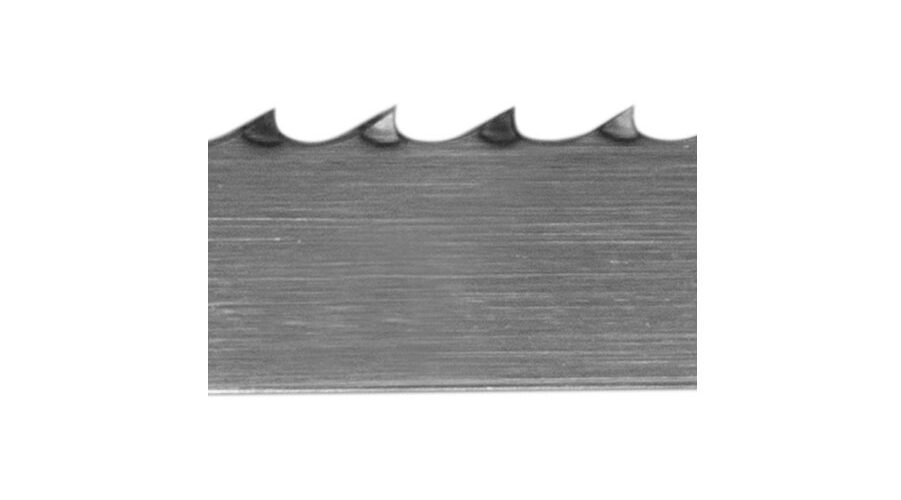
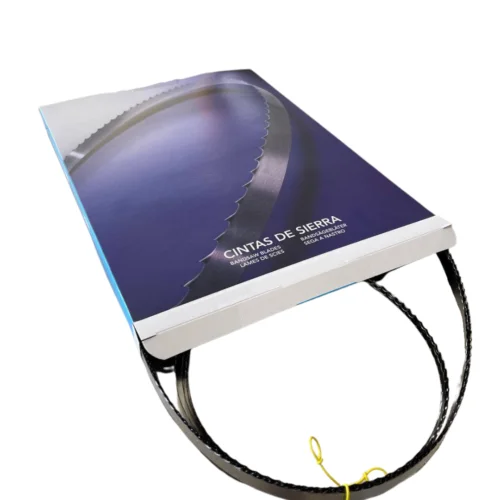
The 2030 mm bone band saw blade is made from laminated carbon steel with a special pearled tooth rated for double life. It matches saws taking a 2030 mm band and passes through bone with a clean cut and no residue. Supplied in a box of four blades.
Band type: BONE (4 TPI). Tooth size: 6.35 mm (4 teeth per inch). A very balanced option for bone-in meat and for improving the look of the cut. Especially suited to machines with a linear speed below 20 m/s. Dimensions: 2,030 × 16 × 0.50 mm (length × width × thickness).
What a 2030 mm bone blade is used for
Bone cutting on a saw this size is done with large pieces and in series. It is the work that punishes the tooth hardest and therefore the work that sets how often a workshop has to reorder bands.
- Meat preparation room: full batches of loin and rib racks.
- Cutting room: separating bone-in sections.
- Butcher’s shop with a workshop: cutting large pieces.
- Catering: cutting up pieces for the menu.
- Light industry: cutting product that has not been boned.
Technical specifications
| Band length |
2,030 mm |
| Dimensions |
2,030 × 16 × 0.50 mm (length × width × thickness) |
| Tooth type |
4 TPI (4 teeth per inch) |
| Tooth size |
6.35 mm (4 teeth per inch) |
| Teeth per inch (TPI) |
4 |
| Recommended use |
Bone-in meat: a very balanced option that improves the look of the cut. |
| Machine speed |
Especially suited to machines with a linear speed below 20 m/s |
| Application |
Cutting bone |
| Material |
Laminated carbon steel |
| Tooth profile |
Special pearled tooth, double life |
| Cut finish |
Clean, no residue |
| Performance |
High |
| Supply |
Box of 4 blades |
The emergency stop nobody ever tests
What almost never happens is checking it. Plenty of shops have gone years without pressing that button, and the day it is needed it may not respond.
Testing it once a month, with the machine running empty, takes a few seconds and is the most worthwhile check there is. Note it down when you do it: a simple record keeps the check from being forgotten and shows the equipment is being maintained. If the button is jammed or damaged, the machine should not be used until it is repaired.
What the supply includes
Box of four 2030 mm band saw blades for cutting bone.
This length is also available in a fresh meat version and in a frozen version.
Frequently asked questions
Which band do I need: meat, bone or frozen?
It depends on what you cut and on your saw’s linear speed (it is in the manual; if you do not know it, call us on +34 967 219 649 with the make and model). The three versions, in this length:
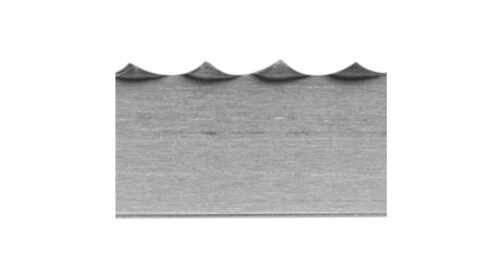
- MEAT (half-moon): 7 mm (half-moon) tooth. Recommended for fresh meat. Dimensions: 2,030 × 16 × 0.40 mm (length × width × thickness). See the 2,030 mm meat band.
- BONE (4 TPI): 6.35 mm (4 teeth per inch) tooth. A very balanced option for bone-in meat and for improving the look of the cut. Especially suited to machines with a linear speed below 20 m/s. Dimensions: 2,030 × 16 × 0.50 mm (length × width × thickness). (this blade)
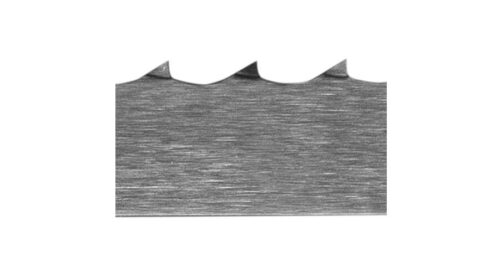
- FROZEN (3 TPI): 8.46 mm (3 teeth per inch) tooth. Recommended for frozen product: a more aggressive cut and high production volume. Works especially well on machines with a linear speed above 20 m/s. Dimensions: 2,030 × 16 × 0.50 mm (length × width × thickness). See the 2,030 mm frozen band.
How often should I test the emergency stop?
Regularly, say once a month, with the machine running empty. It is a check that takes seconds and guarantees the device will respond on the day it is needed, which is exactly the worst moment to find out it does not.
What do I do if the button is jammed?
Do not use the machine until it is repaired. Equipment without a working emergency stop does not meet the safety conditions required of it and exposes the operator to an avoidable risk.
Is the stop switch the same as the emergency stop?
No. The normal stop halts the machine in its usual cycle; the emergency stop cuts immediately and must latch until it is deliberately reset. They are two devices with different jobs.
Can there be more than one stop point?
On larger machines it is common and advisable, so the operator can trigger it from any working position. What matters is that at least one is within reach from where the cutting is done.
Should these checks be recorded?
It is good practice. A simple log of safety checks helps demonstrate that the equipment is maintained and, above all, keeps the check from slipping off the routine.
How do I know what blade length my saw needs?
The number in the product name (1600, 1820, 2330…) is the blade length in millimetres, and it must match exactly the length specified by your saw’s manufacturer on the rating plate or in the manual. If you have no documentation, measure the old blade laid out along its full circumference. Bernad® can help you confirm the length your machine takes.
How many blades come in a box, and how should I store spares?
Four blades, folded to take up less space and travel protected. Store them in their box, somewhere dry and with nothing heavy on top: moisture rusts carbon steel and crushing deforms the blade. When unfolding them, wear gloves and leave space around you, because the blade springs back into shape suddenly.
Other lengths and blade types