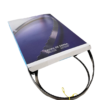
Description
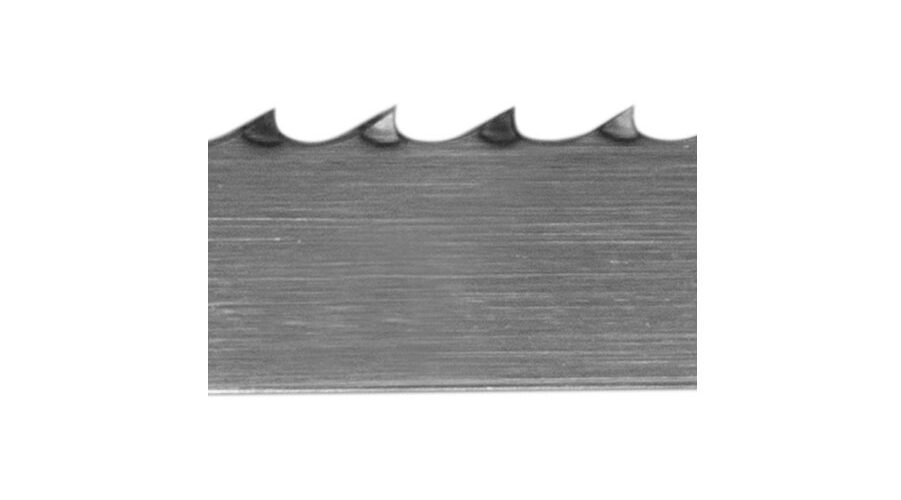
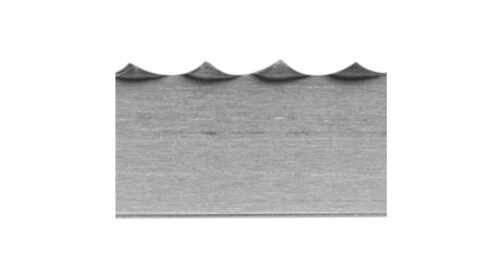
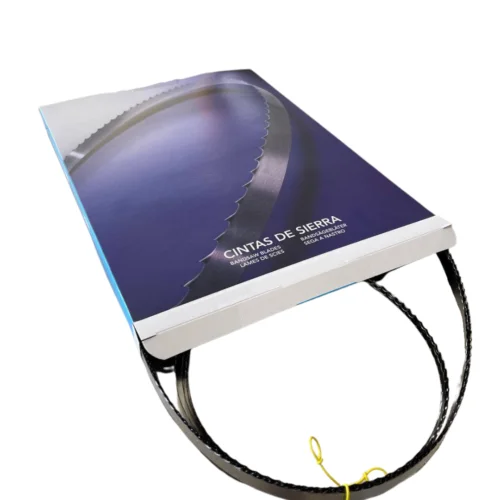
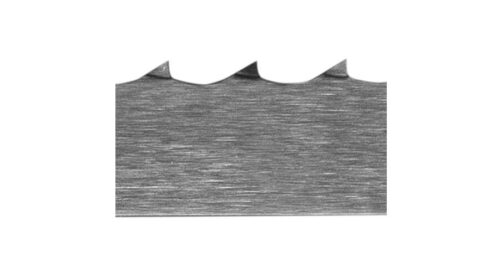
The 2040 mm bone band saw blade is made from laminated carbon steel with a special pearled tooth rated for double life. It matches saws taking a 2040 mm band and passes through bone with a clean cut and no residue. Supplied in a box of four blades.
Band type: BONE (4 TPI). Tooth size: 6.35 mm (4 teeth per inch). A very balanced option for bone-in meat and for improving the look of the cut. Especially suited to machines with a linear speed below 20 m/s. Dimensions: 2,040 × 16 × 0.50 mm (length × width × thickness).
What a 2040 mm bone blade is used for
This is the bone version for medium and large workshop saws. On these machines bone cutting is production work: full batches get prepared and the band runs continuously, which is the scenario where the quality of the tooth shows most clearly.
- Meat preparation room: loin and rib racks by the batch.
- Cutting room: separating bone-in sections.
- Light industry: cutting product that has not been boned.
- Butcher’s shop with production: daily preparation of pieces.
- Catering: cutting up large pieces.
Technical specifications
| Band length |
2,040 mm |
| Dimensions |
2,040 × 16 × 0.50 mm (length × width × thickness) |
| Tooth type |
4 TPI (4 teeth per inch) |
| Tooth size |
6.35 mm (4 teeth per inch) |
| Teeth per inch (TPI) |
4 |
| Recommended use |
Bone-in meat: a very balanced option that improves the look of the cut. |
| Machine speed |
Especially suited to machines with a linear speed below 20 m/s |
| Application |
Cutting bone |
| Material |
Laminated carbon steel |
| Tooth profile |
Special pearled tooth, double life |
| Cut finish |
Clean, no residue |
| Performance |
High |
| Supply |
Box of 4 blades |
The real cost of running a band past its life
There is an understandable temptation to squeeze a few more days out of a band. The arithmetic does not work, though. A spent band cuts more slowly, leaves a worse finish, produces splinters that can force product to be withdrawn and, above all, makes the operator push the piece, which is the gesture behind serious accidents.
Looked at that way, a worn blade turns a safe machine into a dangerous one, and that has nothing to do with the guards. It is the consumable that decides it. Changing on a schedule rather than on judgement removes the grey area: note the changes for a few weeks and you will know your real rhythm.
What the supply includes
Box of four 2040 mm band saw blades for cutting bone.
This length is also available in a fresh meat version and in a frozen version.
Frequently asked questions
Which band do I need: meat, bone or frozen?
It depends on what you cut and on your saw’s linear speed (it is in the manual; if you do not know it, call us on +34 967 219 649 with the make and model). The three versions, in this length:
- MEAT (half-moon): 7 mm (half-moon) tooth. Recommended for fresh meat. Dimensions: 2,040 × 16 × 0.40 mm (length × width × thickness). See the 2,040 mm meat band.
- BONE (4 TPI): 6.35 mm (4 teeth per inch) tooth. A very balanced option for bone-in meat and for improving the look of the cut. Especially suited to machines with a linear speed below 20 m/s. Dimensions: 2,040 × 16 × 0.50 mm (length × width × thickness). (this blade)
- FROZEN (3 TPI): 8.46 mm (3 teeth per inch) tooth. Recommended for frozen product: a more aggressive cut and high production volume. Works especially well on machines with a linear speed above 20 m/s. Dimensions: 2,040 × 16 × 0.50 mm (length × width × thickness). See the 2,040 mm frozen band.
How much does squeezing a band actually cost?
More than a new band: cutting time, product quality and, in the worst case, an accident. It is one of the few economies that nearly always turns out expensive.
How do I judge objectively that it is finished?
Three signs: you have to push the piece, the cut wanders, or the bone splinters. Any one of the three on its own is reason enough to change it.
Is it worth changing on a schedule?
In a workshop with steady volume, yes: it removes the guesswork and guarantees you never work with a blade at its limit. Noting the changes for a few weeks is enough to learn the real interval.
Does a band at its limit show in the product?
Yes, especially on bone: the cut comes out irregular, splinters appear and the meat surface looks torn. At the counter it is perfectly visible to the customer.
Can a worn band damage the machine?
Indirectly. Because the cut costs more effort, the motor and transmission work harder; and a fatigued band is more likely to break, which can damage guides and guards.
How do I know what blade length my saw needs?
The number in the product name (1600, 1820, 2330…) is the blade length in millimetres, and it must match exactly the length specified by your saw’s manufacturer on the rating plate or in the manual. If you have no documentation, measure the old blade laid out along its full circumference. Bernad® can help you confirm the length your machine takes.
How many blades come in a box, and how should I store spares?
Four blades, folded to take up less space and travel protected. Store them in their box, somewhere dry and with nothing heavy on top: moisture rusts carbon steel and crushing deforms the blade. When unfolding them, wear gloves and leave space around you, because the blade springs back into shape suddenly.
Other lengths and blade types