Description
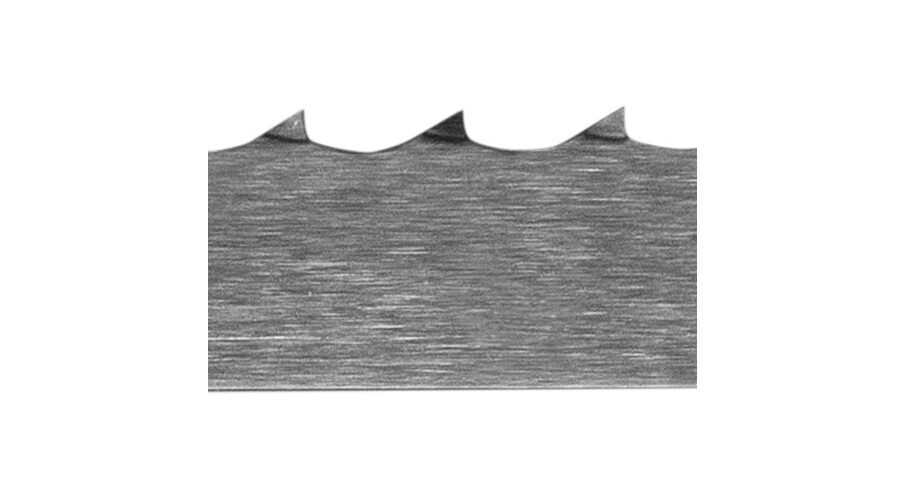
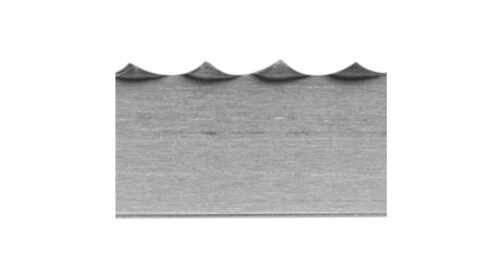
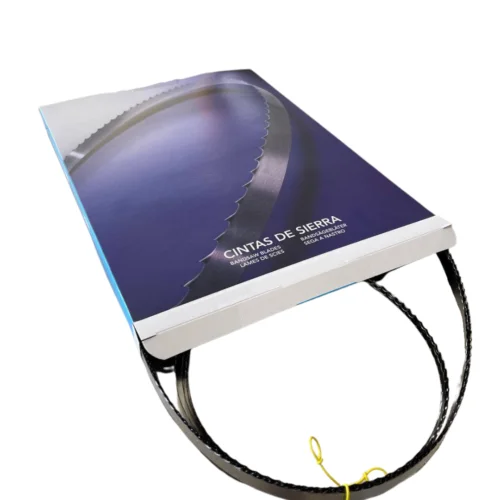
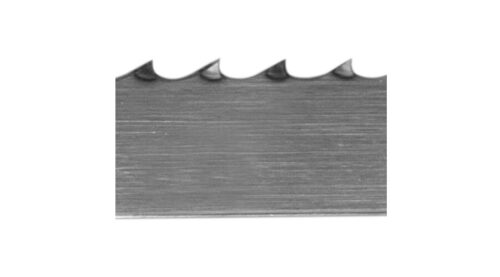
The 1736 mm frozen band saw blade is made from laminated carbon steel with a special pearled tooth rated for double life. It is the version specific to cutting frozen product on saws taking a 1736 mm band, giving a clean cut with no residue. Supplied in a box of four blades.
Band type: FROZEN (3 TPI). Tooth size: 8.46 mm (3 teeth per inch). Recommended for frozen product: a more aggressive cut and high production volume. Works especially well on machines with a linear speed above 20 m/s. Dimensions: 1,736 × 16 × 0.50 mm (length × width × thickness).
What a 1736 mm frozen blade is used for
Frozen product does not behave like fresh meat: it is rigid, it does not give under the blade and it fractures rather than deforming. That calls for a tooth able to take material off a hard block without snagging or splintering it, which is exactly what this version does.
- Butcher’s shop: portioning frozen pieces.
- Fishmonger: cutting steaks and loins from frozen fish.
- Catering and institutional kitchens: dividing product from the cold store.
- Distribution: splitting frozen blocks and pieces.
- Industry: preparing frozen raw material.
Technical specifications
| Band length |
1,736 mm |
| Dimensions |
1,736 × 16 × 0.50 mm (length × width × thickness) |
| Tooth type |
3 TPI (3 teeth per inch) |
| Tooth size |
8.46 mm (3 teeth per inch) |
| Teeth per inch (TPI) |
3 |
| Recommended use |
Frozen product: a more aggressive cut and high production volume. |
| Machine speed |
Works especially well on machines with a linear speed above 20 m/s |
| Application |
Cutting frozen product |
| Material |
Laminated carbon steel |
| Tooth profile |
Special pearled tooth, double life |
| Cut finish |
Clean, no residue |
| Performance |
High |
| Supply |
Box of 4 blades |
Cutting heat and why a sharp band matters on frozen
One detail gets overlooked when cutting frozen product: the cut itself generates heat. If the piece stays out of the cold store too long, the surface starts to thaw, and refreezing thawed product is not acceptable. It degrades quality and compromises safety.
A band in good condition helps directly with this, because it cuts fast and generates less friction. A spent blade stretches the operation and warms the piece more, which is how a blunt band turns into a food safety problem rather than just a slow one. Take out only what you are going to cut, work briskly, and put the product straight back.
What the supply includes
Box of four 1736 mm band saw blades for cutting frozen product.
This length is also available in a fresh meat version and in a bone version.
Frequently asked questions
Which band do I need: meat, bone or frozen?
It depends on what you cut and on your saw’s linear speed (it is in the manual; if you do not know it, call us on +34 967 219 649 with the make and model). The three versions, in this length:
- MEAT (half-moon): 7 mm (half-moon) tooth. Recommended for fresh meat. Dimensions: 1,736 × 16 × 0.40 mm (length × width × thickness). See the 1,736 mm meat band.
- BONE (4 TPI): 6.35 mm (4 teeth per inch) tooth. A very balanced option for bone-in meat and for improving the look of the cut. Especially suited to machines with a linear speed below 20 m/s. Dimensions: 1,736 × 16 × 0.50 mm (length × width × thickness). See the 1,736 mm bone band.
- FROZEN (3 TPI): 8.46 mm (3 teeth per inch) tooth. Recommended for frozen product: a more aggressive cut and high production volume. Works especially well on machines with a linear speed above 20 m/s. Dimensions: 1,736 × 16 × 0.50 mm (length × width × thickness). (this blade)
What makes the frozen blade different?
The tooth is prepared to pass through rigid, abrasive material. Frozen product does not yield, so the blade has to remove material continuously without snagging. A meat band on that job is finished in very little time.
Can I cut any thickness of block?
Within what your machine’s cutting height allows. It is also worth not forcing the feed: with frozen product the temptation to push is greater precisely because it is harder going, and that is where the risk lies.
Does the product need to be fully frozen?
Yes, that is what it is designed for. Half-thawed product is the worst of both worlds: it has neither the rigidity of frozen nor the softness of fresh meat, and the cut comes out badly with any band.
Why do more bands break cutting frozen?
Because the effort is greater and the steel fatigues sooner. On top of that, the operator tends to force it. Checking the tension and not persisting with a worn band is what cuts breakages most.
Should the saw speed be adjusted?
If your machine has variable speed, check the manual: some manufacturers recommend a different setting for frozen product. If it is not adjustable, the thing that matters is moderating how fast you feed the piece.
Other lengths and blade types