Looking for the best price on the market? 🔥 Request a quote and benefit from our more than 35 years of experience in the sector.
✅ Professional machinery backed by our own technical service. Ask now and get the best offer!

Price on request
Looking for the best price on the market? 🔥 Request a quote and benefit from our more than 35 years of experience in the sector.
✅ Professional machinery backed by our own technical service. Ask now and get the best offer!
Questions? Call us on +34 967 219 649 or message us on WhatsApp
We reply to quote requests within 24 hours.
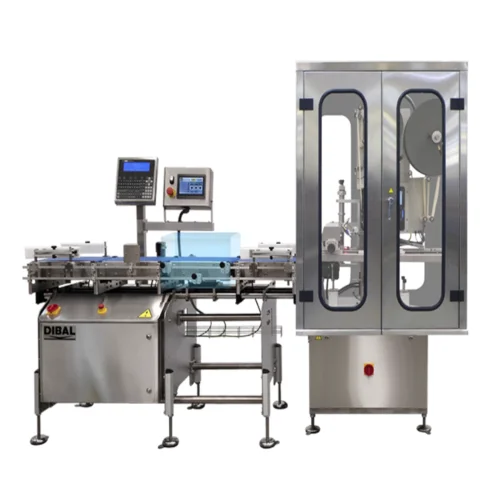
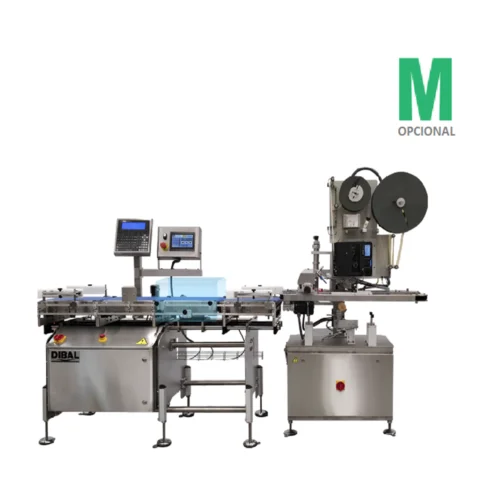
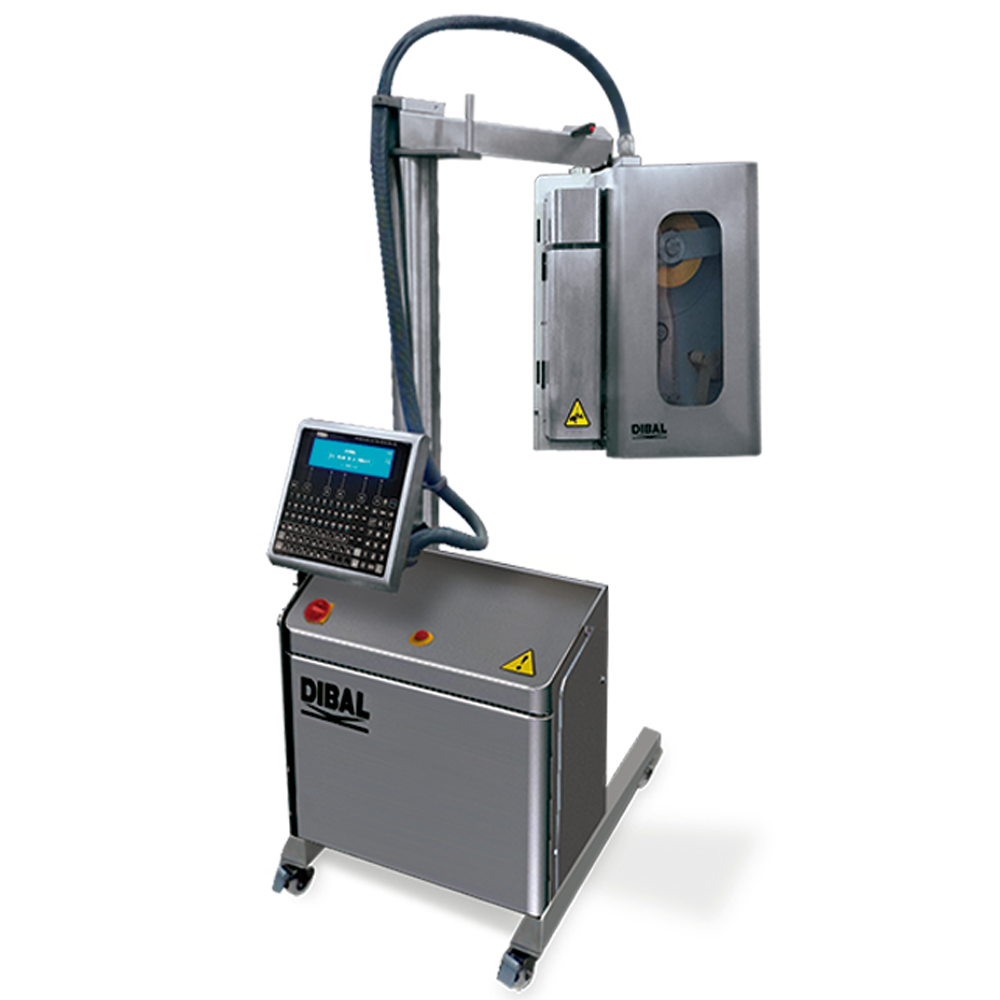
The Dibal LA-4540 TD automatic labeller in the version with carriage prints by thermal transfer or direct thermal, with a 4″ print head, piston applicator and an output of 100 labels per minute with H60 x L60 mm labels.
It is an in-line application labeller: it receives the product, prints and applies the label. This version has a carriage, which allows the unit to be moved and positioned on the line instead of being fixed at one point, and supports both printing technologies, something the version without carriage does not offer.
| Brand and model | Dibal LA-4540 TD (with carriage) |
| Printing | Thermal transfer or direct thermal |
| Print head | 4″ |
| Applicator | Piston; air applicator optional |
| Output | 100 labels/minute with H60 x L60 mm labels |
| Carriage | Yes |
| Labelling modes | Fixed or variable weight-price |
| Traceability | Generic traceability on label |
| Labelling regulations | Adapted to comply with Regulation (EU) 1169/2011 |
| Barcodes | EAN-8, EAN-13, EAN-128, CODE 128, ITF-14, QR code, GS1 Datamatrix and GS1 Databar (up to 4 per label) |
Article 18 of Regulation (EC) 178/2002 establishes that every food business operator must be able to identify who supplied each raw material and to whom each product has been supplied, and make that information available to the authorities. It is the “one step back, one step forward” principle, and in practice relies on a batch that unambiguously identifies each lot.
The label is where that batch becomes visible and travels with the product. That is why it matters that the unit generates generic traceability on the label and supports up to four barcodes, including GS1 Datamatrix and GS1 Databar: those symbologies make it possible to encode the trade identifier together with the batch and date in a single code, which is then read during a product recall without having to rebuild records by hand.
It allows the unit to be moved and positioned on the line instead of being anchored at a fixed point. It is useful when the labelling position changes according to the product or when the machine must be removed for cleaning or maintenance.
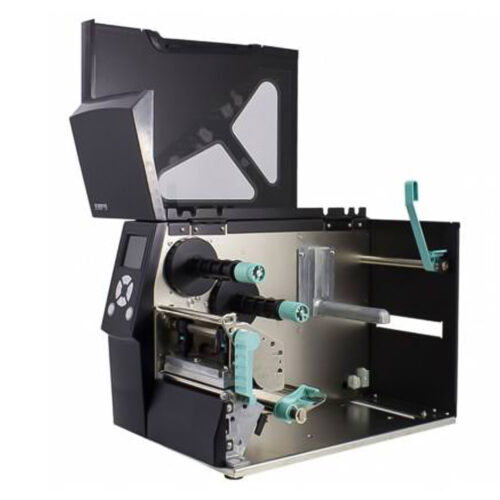
Besides the carriage itself, this version can print by thermal transfer or direct thermal, whereas the version without carriage works only in direct thermal. If the label must withstand cold storage, moisture or rubbing, thermal transfer with ribbon is the right choice.
It is the figure measured with 60 x 60 mm labels. With longer labels the rate drops, because printing time increases with the length of the design. Check the figure against the actual label format you will use.
When the surface is irregular, delicate or does not accept contact with the piston, for example a stretched film that would wrinkle. It applies the label by blowing, without touching the product. It is an option, not standard.
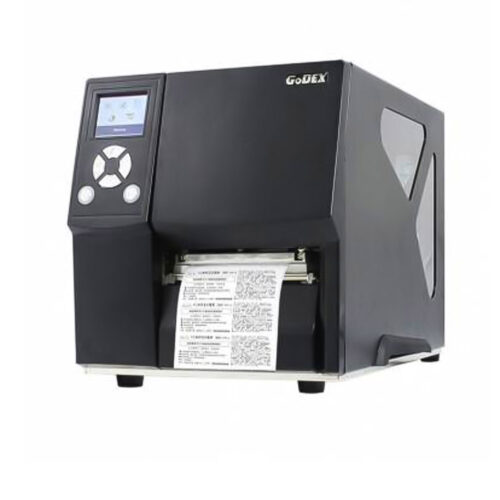
It indicates the useful print width of the thermal head, about 100 mm. It determines the widest label that can be printed; the length is limited by the label format and the design itself.