Description
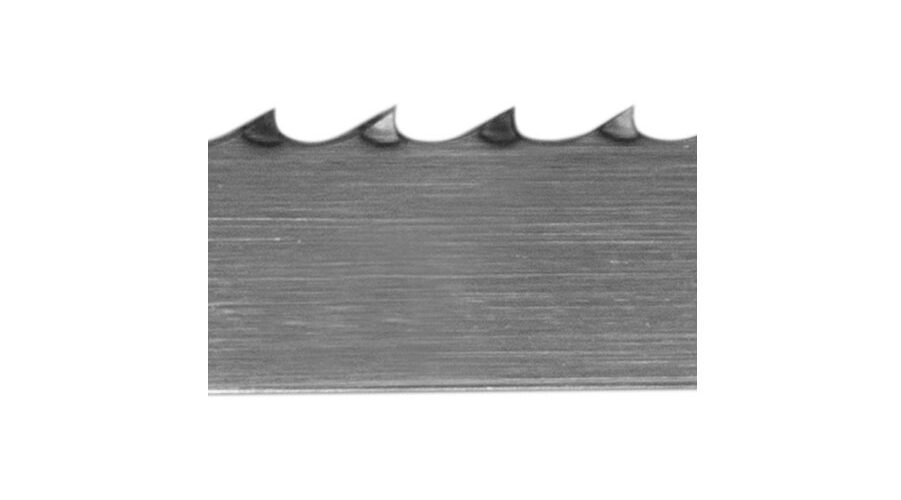
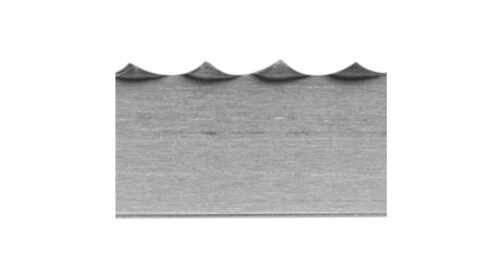
The 1750 mm bone band saw blade is made from laminated carbon steel with a special pearled tooth rated for double life. It matches saws taking a 1750 mm band and is built for cutting bone with a clean finish and no residue. Supplied in a box of four blades.
Band type: BONE (4 TPI). Tooth size: 6.35 mm (4 teeth per inch). A very balanced option for bone-in meat and for improving the look of the cut. Especially suited to machines with a linear speed below 20 m/s. Dimensions: 1,750 × 16 × 0.50 mm (length × width × thickness).
What a 1750 mm bone blade is used for
A shop selling chops, rib racks and cut-down pieces uses the bone blade every day, usually in short bursts spread through the working day. That pattern of use, switch on, cut two pieces, switch off, wears the band less visibly than one long session but just as surely.
- Butcher’s shop: pork, beef and lamb loin and rib racks.
- Supermarket: cutting to order on the fresh counter.
- Preparation room: bone-in breaking down in batches.
- Catering: cutting up pieces for the menu.
- Cutting room: separating bone-in sections.
Technical specifications
| Band length |
1,750 mm |
| Dimensions |
1,750 × 16 × 0.50 mm (length × width × thickness) |
| Tooth type |
4 TPI (4 teeth per inch) |
| Tooth size |
6.35 mm (4 teeth per inch) |
| Teeth per inch (TPI) |
4 |
| Recommended use |
Bone-in meat: a very balanced option that improves the look of the cut. |
| Machine speed |
Especially suited to machines with a linear speed below 20 m/s |
| Application |
Cutting bone |
| Material |
Laminated carbon steel |
| Tooth profile |
Special pearled tooth, double life |
| Cut finish |
Clean, no residue |
| Performance |
High |
| Supply |
Box of 4 blades |
The pusher is not optional
Of all the safety devices on a band saw, the pusher is the one most often abandoned and the one that prevents most accidents. Feeding the piece by hand, particularly when there is little material left and the cut is about to break through, is the gesture behind most of the serious injuries on this equipment.
In practice the rule is simple: if the piece is so small that you have to hold it with your fingers near the band, that piece gets finished with a knife instead. The pusher is a cheap part that rarely gets replaced once it goes missing, and it should always be at the workstation.
What the supply includes
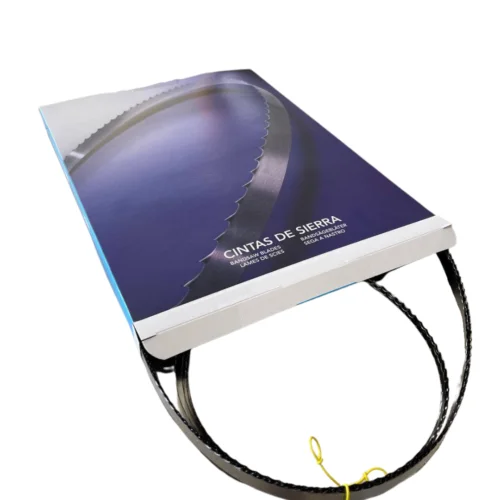
Box of four 1750 mm band saw blades for cutting bone.
The same length is available in a version for fresh meat.
Frequently asked questions
Which band do I need: meat, bone or frozen?
It depends on what you cut and on your saw’s linear speed (it is in the manual; if you do not know it, call us on +34 967 219 649 with the make and model). The three versions, in this length:
- MEAT (half-moon): 7 mm (half-moon) tooth. Recommended for fresh meat. Dimensions: 1,750 × 16 × 0.40 mm (length × width × thickness). See the 1,750 mm meat band.
- BONE (4 TPI): 6.35 mm (4 teeth per inch) tooth. A very balanced option for bone-in meat and for improving the look of the cut. Especially suited to machines with a linear speed below 20 m/s. Dimensions: 1,750 × 16 × 0.50 mm (length × width × thickness). (this blade)
- FROZEN (3 TPI): 8.46 mm (3 teeth per inch) tooth. Recommended for frozen product: a more aggressive cut and high production volume. Works especially well on machines with a linear speed above 20 m/s. Dimensions: 1,750 × 16 × 0.50 mm (length × width × thickness). Not in our range at 1,750 mm: see other lengths in Saw Blades.
What do I do with small pieces?
Do not finish them on the saw. When the piece is so short that it forces your fingers near the band, finish the cut with a knife or discard that offcut. No piece of meat justifies the risk.
Can I cut wearing a chain mail glove?
A chain mail glove protects against a knife, not against a running band saw. It is no substitute for the pusher or for keeping hands away from the cutting zone.
How often should the guards be checked?
Visually at least, during the daily clean: that they are in place, complete and that they close. Then a more thorough check at periodic maintenance, along with the emergency stop and the condition of the wiring.
Does wear change much between species?
Yes. Adult beef bone is the most demanding; lamb and pork wear the band considerably less. A workshop alternating species will notice band consumption rise during the beef-heavy periods.
Should I always keep a spare band?
Yes. A broken band puts the saw out of service, and bone cutting has no reasonable manual alternative. A spare is the difference between five minutes of downtime and a day half finished.
How do I know what blade length my saw needs?
The number in the product name (1600, 1820, 2330…) is the blade length in millimetres, and it must match exactly the length specified by your saw’s manufacturer on the rating plate or in the manual. If you have no documentation, measure the old blade laid out along its full circumference. Bernad® can help you confirm the length your machine takes.
How many blades come in a box, and how should I store spares?
Four blades, folded to take up less space and travel protected. Store them in their box, somewhere dry and with nothing heavy on top: moisture rusts carbon steel and crushing deforms the blade. When unfolding them, wear gloves and leave space around you, because the blade springs back into shape suddenly.
Other lengths and blade types