Description
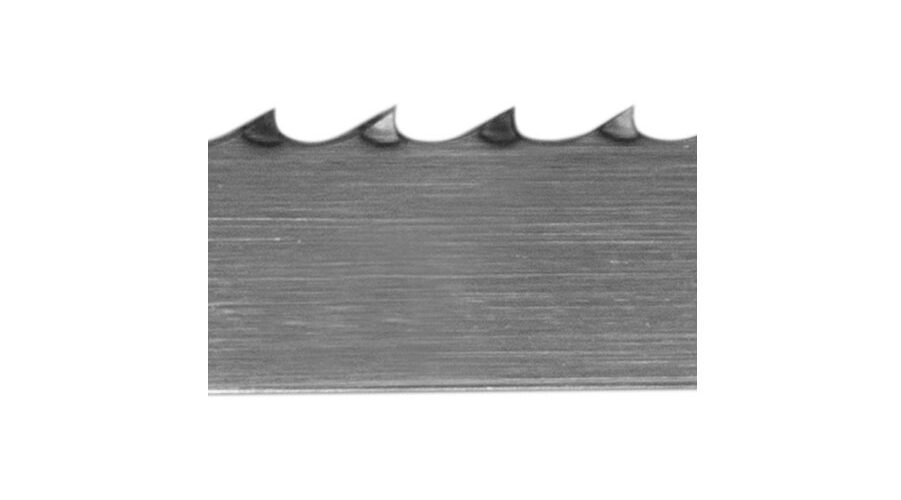
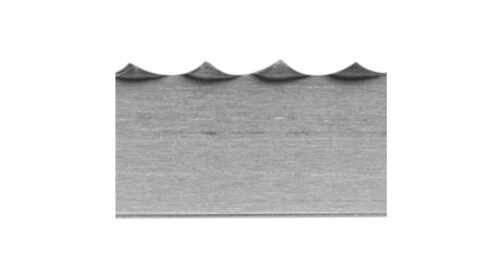
The 1760 mm bone band saw blade is made from laminated carbon steel with a special pearled tooth rated for double life. It matches saws taking a 1760 mm band and is prepared for cutting bone with a clean finish and no residue. Supplied in a box of four blades.
Band type: BONE (4 TPI). Tooth size: 6.35 mm (4 teeth per inch). A very balanced option for bone-in meat and for improving the look of the cut. Especially suited to machines with a linear speed below 20 m/s. Dimensions: 1,760 × 16 × 0.50 mm (length × width × thickness).
What a 1760 mm bone blade is used for
Bone is the material that sets the replacement rhythm for bands in any butcher’s shop. That is why the dedicated blades carry a different tooth: the aim is not to cut faster, it is to keep going longer while still giving an equally clean cut.
- Butcher’s shop: loin racks, rib racks and bone-in cutting.
- Preparation room: preparing product that has not been boned.
- Supermarket: cutting to order on the fresh counter.
- Catering: pieces for roasting and grilling.
- Cutting room: separating bone-in sections.
Technical specifications
| Band length |
1,760 mm |
| Dimensions |
1,760 × 16 × 0.50 mm (length × width × thickness) |
| Tooth type |
4 TPI (4 teeth per inch) |
| Tooth size |
6.35 mm (4 teeth per inch) |
| Teeth per inch (TPI) |
4 |
| Recommended use |
Bone-in meat: a very balanced option that improves the look of the cut. |
| Machine speed |
Especially suited to machines with a linear speed below 20 m/s |
| Application |
Cutting bone |
| Material |
Laminated carbon steel |
| Tooth profile |
Special pearled tooth, double life |
| Cut finish |
Clean, no residue |
| Performance |
High |
| Supply |
Box of 4 blades |
What double life means in practice
The manufacturer rates the pearled tooth at double the life of a conventional one. Translated into workshop terms, that means fewer band changes over a year and, more to the point, more hours cutting with a tooth that is still in good condition. The second effect is the one that matters: it is not only a saving on consumables, it is that for longer the cut comes out right and nobody has to push.
That connects straight to safety. A band that forces the operator to lean on the piece is a risk as well as a poor result, and it is the single most common factor behind serious incidents on this machine. Replacing on time is cheaper than the alternative in every sense.
What the supply includes
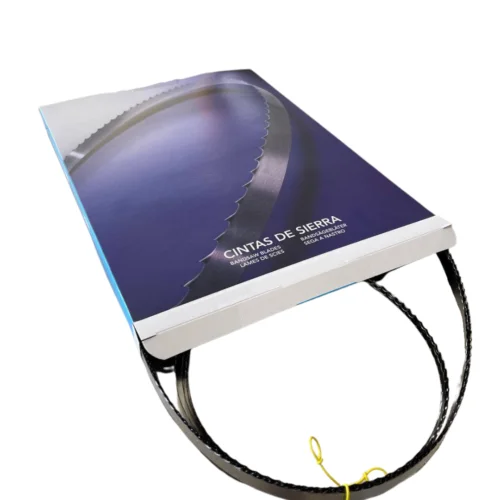
Box of four 1760 mm band saw blades for cutting bone.
The same length is available in a version for fresh meat.
Frequently asked questions
Which band do I need: meat, bone or frozen?
It depends on what you cut and on your saw’s linear speed (it is in the manual; if you do not know it, call us on +34 967 219 649 with the make and model). The three versions, in this length:
- MEAT (half-moon): 7 mm (half-moon) tooth. Recommended for fresh meat. Dimensions: 1,760 × 16 × 0.40 mm (length × width × thickness). See the 1,760 mm meat band.
- BONE (4 TPI): 6.35 mm (4 teeth per inch) tooth. A very balanced option for bone-in meat and for improving the look of the cut. Especially suited to machines with a linear speed below 20 m/s. Dimensions: 1,760 × 16 × 0.50 mm (length × width × thickness). (this blade)
- FROZEN (3 TPI): 8.46 mm (3 teeth per inch) tooth. Recommended for frozen product: a more aggressive cut and high production volume. Works especially well on machines with a linear speed above 20 m/s. Dimensions: 1,760 × 16 × 0.50 mm (length × width × thickness). Not in our range at 1,760 mm: see other lengths in Saw Blades.
Is a longer-life band worth paying for?
Usually yes, because the real cost is not the price of the band but the downtime to change it and, above all, the hours spent working with a mediocre cut. A blade that lasts twice as long reduces both.
How do I know if I am changing the band too late?
If the operator has started pushing the piece, you are already late. That is the most reliable indicator, more so than the look of the tooth: once the band stops feeding on its own, its working life is over.
Can I extend the band’s life by cleaning it well?
It helps, particularly with fatty product: a clogged band cuts worse and looks worn when it is not. But cleaning does not restore a worn tooth, it only stops you mistaking dirt for wear.
Does bone dust damage the machine?
It builds up in guides and bearings and acts as an abrasive if it is not removed. That is why cleaning the saw daily is not just hygiene: it is maintenance that extends the life of the equipment.
Should I keep a record of band changes?
It is not compulsory, but it is useful. Noting the date of each change lets you spot if consumption jumps, which almost always means the machine needs looking at.
How do I know what blade length my saw needs?
The number in the product name (1600, 1820, 2330…) is the blade length in millimetres, and it must match exactly the length specified by your saw’s manufacturer on the rating plate or in the manual. If you have no documentation, measure the old blade laid out along its full circumference. Bernad® can help you confirm the length your machine takes.
How many blades come in a box, and how should I store spares?
Four blades, folded to take up less space and travel protected. Store them in their box, somewhere dry and with nothing heavy on top: moisture rusts carbon steel and crushing deforms the blade. When unfolding them, wear gloves and leave space around you, because the blade springs back into shape suddenly.
Other lengths and blade types